
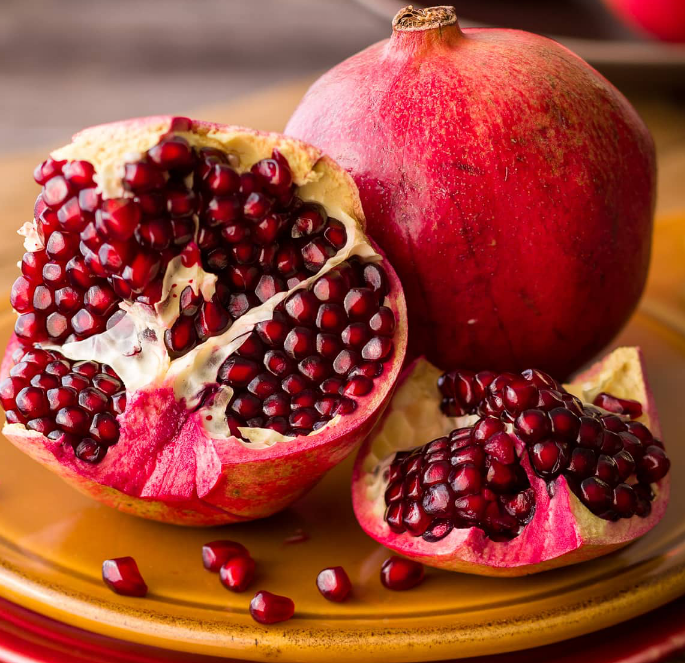
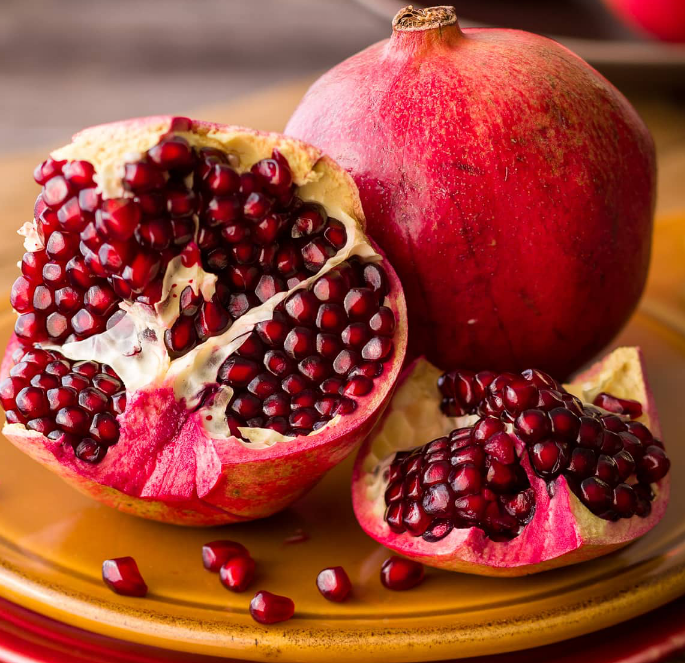
Pomegranates have been used for years for their health benefits. Modern science has found that pomegranates can help protect your heart and may even prevent cancer.A pomegranate is a sweet, tart fruit with thick, red skin. While the skin is not edible, it holds hundreds of juicy seeds that you can eat plain or sprinkle on salads, oatmeal, hummus, and other dishes. Bottled pomegranate juice is also an easy way to enjoy some of the health benefits of this delicious fruit.
1. It lowers the risk of heart disease
Pomegranate juice contains antioxidants at higher levels than do many other fruit juices, and it contains nearly three times as many antioxidants as green tea or red wine does. Antioxidants are thought to provide several heart-protecting benefits.
2. Lower risk of cancer
Its anti-inflammatory properties may help reduce the risk of developing cancer. In preclinical and animal models, pomegranate has been shown to reduce existing cancer cell growth, induce cell death, prevent blood vessel growth associated with tumors, and inhibit the spread of cancer cells in the body.
3.Packed with nutrition
The small pink seeds inside a pomegranate, called the arils, are the edible portion of the fruit. While they can be labor-intensive to remove from the fruit’s inner flesh, their nutritional profile and flavor are well worth the investment.
Overall, pomegranates are low in calories and fat but high in fiber, vitamins, and minerals. They also contain some protein.
Below is the nutrition for the arils in one average (282-gram) pomegranate fruit :
- Calories: 234
- Protein: 4.7 grams
- Fat: 3.3 grams
- Carbohydrates: 52 grams
- Sugar: 38.6 grams
- Fiber: 11.3 grams
- Calcium: 28.2 mg, or 2% of the Daily Value (DV)
- Iron: 0.85 mg, or 5% of the DV
- Magnesium: 33.8 mg, or 8% of the DV
- Phosphorus: 102 mg, or 8% of the DV
- Potassium: 666 mg, or 13% of the DV
- Vitamin C: 28.8 mg, or 32% of the DV
- Folate (vitamin B9): 107 mcg, or 27% of the DV
Comparatively, a 1/2-cup (87-gram) serving of arils provides 72 calories, 16 grams of carbs, 3.5 grams of fiber, 1 gram of fat, and 1.5 grams of protein .
Keep in mind that the nutritional information for pomegranate and arils differs from that of pomegranate juice, which won’t provide much fiber or vitamin C. This applies to fruit in general — eating the whole form will provide more fiber.
4. Reduce cholesterol
Pomegranate helps fight bad cholesterol level, it helps reduce LDL cholesterol and increase HDL cholesterol which is good cholesterol hence it is very beneficial for the heart.The red seeds contain nutrients that aid in lowering cholesterol and preventing muscle cramps. Pomegranate seeds are high in antioxidants and can aid in preventing muscle cramps and lowering cholesterol.
5. It controls weight
Pomegranates are low in calories and high in vitamins and minerals. They also contain a healthy amount of fibre and polyphenol compounds that can aid in weight loss. Adding them to your daily diet would be an effective way to shed those extra pounds, when clubbed with a balanced diet and exercise.
6. Maintain your liver health
Due to its scavenging activity, Punica granatum may be used for the treatment and prevention of liver diseases. The current study investigated the protective mechanism underlying the effects of pomegranate against a rat model of carbon tetrachloride–induced liver injury.Pomegranate has been well documented in relation to the protective role against liver related diseases such as fatty liver in obesity, fatty liver induced by junk food .
7. Promotes digestion
Pomegranate compounds may promote healthy gut bacteria and reduce inflammation in the digestive tract. The arils are also rich in fiber, which serves as fuel for probiotics and helps prevent certain digestive health conditions.Pomegranate juice is a refreshing beverage that is rich in vitamin C. However, it can trigger reflux and heartburn due to its high acidity content and low fiber content.
8. Helpful in low blood pressure
Pomegranate juice consumption may reduce systolic blood pressure, inhibits serum ACE activity, and is convincingly a heart-healthy fruit . Pomegranate juice consumption inhibits serum angiotensin converting enzyme activity and reduces systolic blood pressure.
9. Prevents fungul and bacterial infection
Research indicates that pomegranates and their extracts may serve as natural alternatives due to their potency against a wide range of bacterial and viral pathogens. Nearly every part of the pomegranate plant has been tested for antimicrobial activities, including the fruit juice, peel, arils, flowers, and bark.
Polyphenols extracted from pomegranate fruit rind were active against phytopathogenic fungi [13]. The extract of P. granatum showed good results as a topical antifungal agent for the treatment of candidosis associated with denture stomatitis [14]. The tannin punicalagin is the major component of pomegranate fruit pee
10. Sharpens memory
The pomegranate group had increased fMRI activity during verbal and visual memory tasks. While preliminary, these results suggest a role for pomegranate juice in augmenting memory function through task-related increases in functional brain activity.

 natural wellnes