
Keywords:- leafy vegetables, Some healthiest green leafy vegetables, why should not eat large amount of green leafy vegetables, Summary.
Leaf vegetables
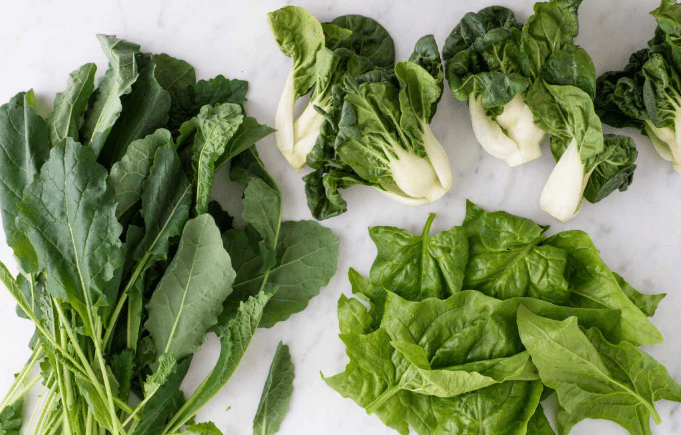
Green leafy vegetables are healthy foods that can help complete a balanced diet. They are typically rich in nutrients and fiber and low in calories and fat.
Leaf vegetables also called leafy greens, pot herbs, vegetables green , or simply greens, are plant leaves eaten as a vegetables, sometimes accompanied by tender petioles and shoots. Leaf vegetables eaten raw in a salad can be called salad greens.
Some healthiest green leafy vegetables
1. Spinach :-
Spinach is a popular leafy green vegetable and is easily incorporated into a variety of dishes, including soups, sauces, smoothies and salads.
Its nutrient profile is impressive with one cup (30 grams) of raw spinach providing 181% of the DV for vitamin K, 56% of the DV for vitamin A and 13% of the DV for manganese .
It’s also packed with folate, which plays a key role in red blood cell production and the prevention of neural tube defects in pregnancy .
One study on the neural tube defect spina bifida found that one of the most preventable risk factors for this condition was a low intake of folate during the first trimester of pregnancy .
Along with taking a prenatal vitamin, eating spinach is a great way to increase your folate intake during pregnancy.
2. Cabbage
Cabagge is formed of clusters of thick leaves that come in green, white and purple colors.
It belongs to the Brassica family, along with Brussels sprouts, kale and broccoli.
Vegetables in this plant family contain glucosinolates, which give them a bitter flavor.
Animal studies have found that foods that contain these plant compounds may have cancer-protective properties, especially against lung and esophageal cancer.
Another benefit of cabbage is that it can be fermented and turned into sauerkraut , which provides numerous health benefits, such as improving your digestion and supporting your immune system. It may even aid weight loss.
3. Beet greens:- Beet Greens is a nutritious and healthy vegetable that contains vital nutrients such as vitamins A, C, and K; minerals like iron, magnesium, potassium, zinc, and manganese; dietary fiber and antioxidants. This vegetable aids in strengthening the function of the nervous system.
4. Kale
Kale , or leaf cabbage, belongs to a group of cabbage(brassica oleracea) cultivars grown for their edible leaves, although some are used as ornaments.
Kale plants have green or purple leaves, and the central leaves do not form a head ( as with headed cabbage) . Kales are considered to be closer to wild cabbage than most of the many domesticated forms of Brassica oleracea.
- Vitamin A (important for eye and bone health and a strong immune system), vitamin C (aids in cold and chronic disease prevention), and vitamin K (good for blood clotting and bone building)
- Folate, a B vitamin that’s key for brain development.
- Alpha-linolenic acid, an omega-3 fatty acid.
5. Microgreens
While there are a wide variety of microgreens that you can buy (or grow at home), the names of these miniature plants should sound familiar: beets, Swiss chard, broccoli, mustard, arugula, amaranth, and peas among others. Microgreens are simply the versions of these vegetables and herbs when they are in their tiny sprout form.There are around sixty different kinds of microgreens. Not only do microgreens add a nutritional punch to salads, soups, or sandwiches, but they are also tender and offer delicious flavor.
Microgreens have become increasingly popular in the past handful of years, and a great deal of ongoing research seeks to understand all the health benefits these tiny plants offer.
Early research has indicated that microgreens contain up to 40% more phytochemicals (beneficial nutrients and components) than their full-grown counterparts.
Though these little greens are small in stature, they contain extremely high levels of powerful vitamins, minerals , and health-supporting components.
Microgreens can lower blood pressure.Foods that are high in fiber and vitamin K can be helpful in maintaining a healthy blood pressure, and microgreens are high in both of these important elements as well as other vitamins and minerals.
6. Collard greens
Collard greens are a leafy, green vegetable and a member of the Brassica genus of plants, just like broccoli, cabbage, and kale. These plants are native to North America and have been a traditional part of the Southern American diet for hundreds of years. Just like other Brassicas, collard greens are packed with nutrition and provide many health benefits when eaten regularly as part of a healthy diet.
The vitamins, minerals, and dietary fiber found in collard greens provide significant health benefits. Dietary fiber is important for helping maintain your digestive health. The soluble fiber in collard greens can help absorb cholesterol before it makes its way into your bloodstream, lowering your cholesterol levels. The insoluble fiber in collard greens feeds the goid bacteria in your gut, which can help you digest foods more efficiently.
Who should not eat large amount green leafy vegetables ?
Eating leafy greens is generally good for the health. However, some greens, such as collards, spinach, and chard, contain large amounts of vitamin K that may interact with blood thinners and lessen their effect. According to a 2016 review , people who take blood thinners should not try to avoid vitamin K.
Summary
Green leafy vegetables are nutrient-packed foods that may offer a variety of health benefits. Regularly consuming servings of greens can be beneficial for health and may help prevent some health conditions.
Although greens are nutritious, they can interact with certain drugs, and overconsumption can have side effects. Some greens contain antinutrients that limit nutrient absorption. However, a person can typically remedy this by adequately cooking the vegetables.

 natural wellnes